Architecture
ROSI Collector combines several components into a cohesive logging and monitoring stack. This page describes each component, how they interact, and the data flows through the system.
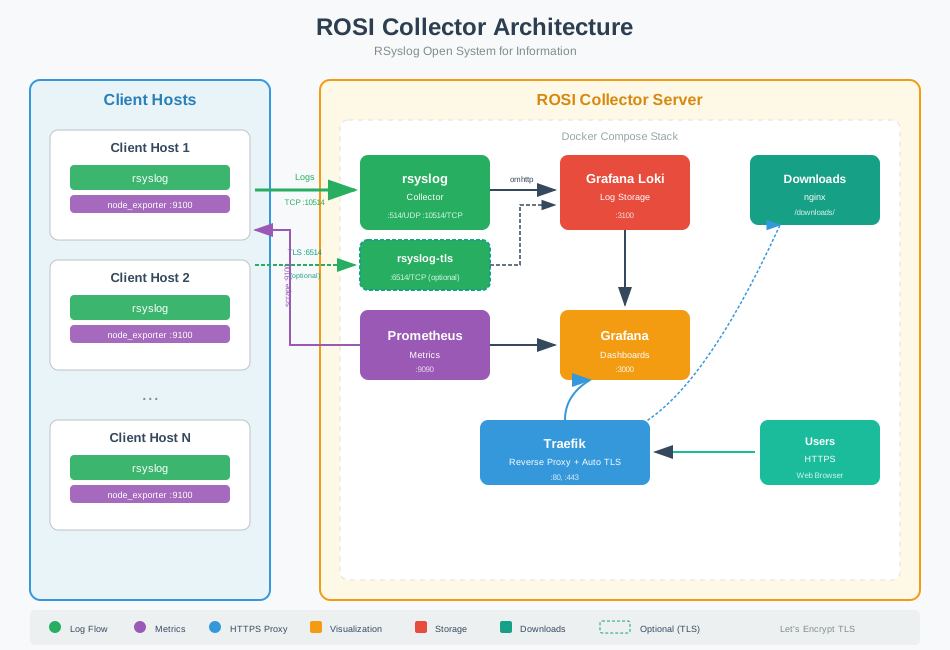
ROSI Collector architecture showing data flows between components
Component Overview
rsyslog (Log Receiver)
The rsyslog container receives logs from client hosts over TCP port 10514. It processes incoming messages and forwards them directly to Loki using the omhttp output module. rsyslog provides:
High-performance log reception (handles thousands of messages/second)
Message parsing and normalization
Queue-based reliability (messages survive brief outages)
Direct Loki integration via omhttp module
Optional JSON file output for backup/debugging
Grafana Loki (Log Storage)
Loki stores logs in a compressed, indexed format optimized for LogQL queries. Unlike traditional log management systems, Loki indexes only labels (metadata) rather than full-text, making it highly efficient:
30-day default retention
Label-based indexing for fast queries
Efficient compression reduces storage needs
LogQL query language (similar to PromQL)
Prometheus (Metrics)
Prometheus scrapes metrics from node_exporter running on client hosts. It stores time-series data and provides alerting capabilities:
Automatic service discovery from targets file
15-day metrics retention
PromQL for metric queries and alerts
Recording rules for dashboard performance
Grafana (Visualization)
Grafana provides the web interface for exploring logs and viewing dashboards. It connects to both Loki (logs) and Prometheus (metrics):
Pre-provisioned dashboards
Explore interface for ad-hoc queries
Alerting integration
User authentication
Traefik (Reverse Proxy)
Traefik handles external access to the stack, providing:
Automatic TLS certificates via Let’s Encrypt
Basic authentication for Prometheus/Alertmanager
Request routing to internal services
HTTP to HTTPS redirect
Downloads (File Server)
A lightweight nginx container serves client setup files:
Installation scripts (rsyslog client, node_exporter)
Configuration templates
CA certificates (when TLS is enabled)
Client certificate packages (for mTLS)
Files are accessible at https://grafana.TRAEFIK_DOMAIN/downloads/.
Data Flow
Log Data Flow
Client hosts run rsyslog configured to forward logs to the collector
Collector rsyslog receives logs on TCP 10514
rsyslog omhttp sends logs directly to Loki with labels
Loki stores labeled log entries in compressed format
Grafana queries Loki to display logs in dashboards and Explore
Metrics Data Flow
Client hosts run node_exporter exposing system metrics on port 9100
Prometheus scrapes metrics from targets listed in
nodes.ymlGrafana queries Prometheus to display metrics in dashboards
Network Ports
Service |
Port |
Protocol |
Description |
|---|---|---|---|
Traefik |
80 |
TCP |
HTTP (redirects to HTTPS) |
Traefik |
443 |
TCP |
HTTPS - external access |
rsyslog |
514 |
UDP |
Syslog reception (UDP) |
rsyslog |
10514 |
TCP |
Log reception from clients (TCP) |
rsyslog |
6514 |
TCP |
TLS-encrypted syslog (optional profile) |
Grafana |
3000 |
TCP |
Web UI (internal, proxied by Traefik) |
Loki |
3100 |
TCP |
Log API (internal) |
Prometheus |
9090 |
TCP |
Metrics API (internal, proxied) |
Container Services
The Docker Compose stack defines these services:
services:
  traefik:      # Reverse proxy with TLS
  rsyslog:      # Log receiver with omhttp output (TCP/UDP)
  rsyslog-tls:  # TLS-encrypted log receiver (profile: tls)
  loki:         # Log storage
  prometheus:   # Metrics collection
  grafana:      # Visualization
  downloads:    # Client setup file server
The rsyslog-tls service starts automatically when SYSLOG_TLS_ENABLED=true
in your .env file:
docker compose up -d
All containers communicate on an internal Docker network. Only Traefik, rsyslog (10514/514), and rsyslog-tls (6514) are exposed to external traffic.
Storage Volumes
The stack uses Docker volumes for persistent data:
Volume |
Mount Point |
Purpose |
|---|---|---|
loki-data |
/loki |
Log storage |
prometheus-data |
/prometheus |
Metrics storage |
grafana-data |
/var/lib/grafana |
Dashboards, preferences |
rsyslog-logs |
/var/log/remote |
Received log files |
traefik-certs |
/letsencrypt |
TLS certificates |
Resource Requirements
Minimum requirements for a small deployment (10-50 clients):
CPU: 2 cores
RAM: 4 GB (Loki is the primary consumer)
Disk: 50 GB (depends on log volume and retention)
For larger deployments, scale based on:
Log volume: ~1 GB storage per 10 million log lines
Retention period: Multiply daily volume by retention days
Query load: Additional RAM improves query performance
Scaling Considerations
ROSI Collector is designed for single-server deployments. For larger environments, consider:
Horizontal scaling: Deploy multiple collectors with load balancing
Loki clustering: Run Loki in distributed mode
External storage: Use S3-compatible storage for Loki chunks
Prometheus federation: Aggregate metrics from multiple Prometheus
Support: rsyslog Assistant | GitHub Discussions | GitHub Issues: rsyslog source project
Contributing: Source & docs: rsyslog source project
© 2008–2025 Rainer Gerhards and others. Licensed under the Apache License 2.0.